Inside No Studios in Milwaukee, sorrow and sadness filled the air, yet the room also pulsated with a strong undercurrent of hope. Public officials, as well as civic, faith, and community leaders, came together to remember those who were lost and to mobilize.
Dozens of black balloons floated above the crowd, casting quiet shadows over a room filled with community members, civic leaders, and fierce advocates. These balloons served as stark, floating monuments to the countless lives stolen by the drug overdose epidemic. This was Samad’s House Black Balloon Day—a sacred space carved out for mourning, but equally, a launching pad for preventing deaths.
Black Balloon Day serves as a national day of remembrance. The black balloon symbolizes the heavy, suffocating toll of overdose deaths. It is a visual representation of the empty spaces left behind at dinner tables, in family portraits, and within our neighborhoods. On Friday, March 6, that symbolism transformed into a powerful catalyst for collective action. A community was turning its deepest pain into a structured, life-saving purpose.
Tahira Malik, the CEO and founder of Samad’s House, stood before the attentive audience, holding the room’s focus with a message grounded in both sorrow and determination. “Each year we commemorate the lives lost unnecessarily to overdose deaths,” Malik shared. “These deaths were preventable. Black Balloon Day is a time to mourn and to issue an urgent call to action. We have the tools, naloxone, fentanyl testing strips, and other harm reduction education to be able to save lives. Our mission is to ensure that every community, especially Black and Brown communities, has access to these life-saving resources.”
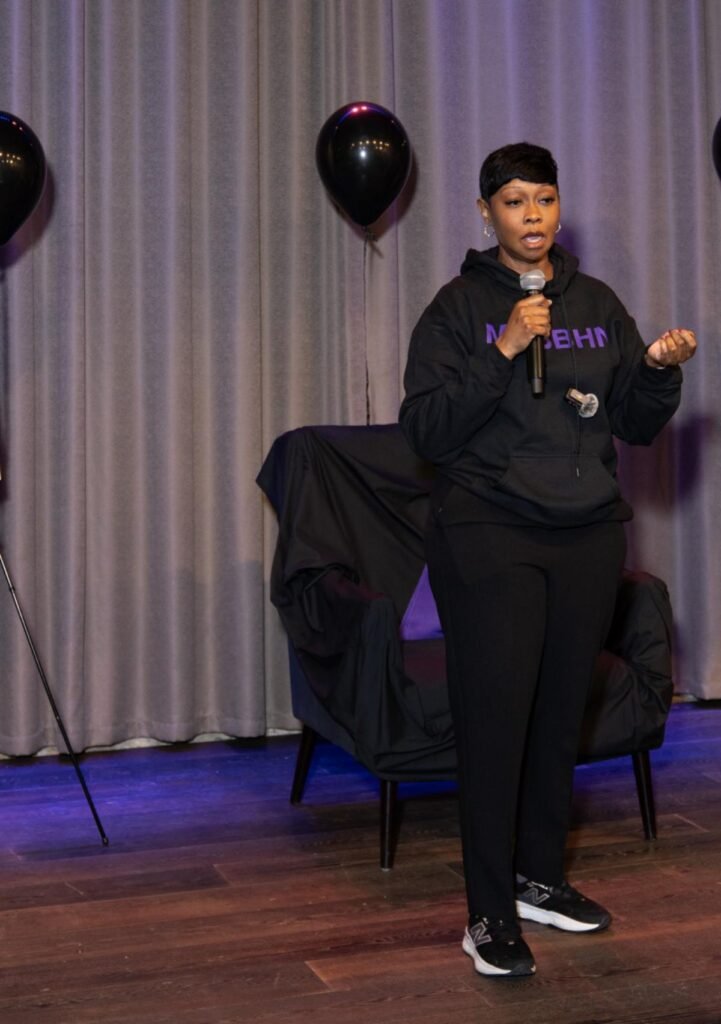
Tahira Malik
Her words underscored a heartbreaking reality: Milwaukee and other cities lose people to a crisis we actually have the tools to fight. The disconnect lies in access, education, and systemic support. To help bridge this massive gap, Malik used the event to announce a monumental initiative – the Midwest Regional Black and Brown Harm Reduction Network.
This groundbreaking alliance will stretch far beyond Milwaukee’s borders, with plans to expand into 12 or more states. The network stands firmly on several core pillars. First, resource sharing ensures that life-saving materials reach the most vulnerable areas. Second, narrative change aims to rewrite the public story surrounding substance disorders. Third, comprehensive data allows communities to own and interpret the statistics that shape their lives. Finally, caregiver support recognizes the immense toll taken on those who love and care for individuals fighting substance disorders.
By uniting organizations serving Black and Brown communities, the coalition will directly address the inequities built into traditional public health and safety responses. It lifts up the voices of people with lived experiences, placing them at the center of the solution.
“The launch of the Midwest Regional Black and Brown Harm Reduction Network represents a transformative step in addressing the overdose crisis through a culturally responsive, community-driven approach,” Malik explained, her voice steady and resolute. “Our vision is a Midwest where Black and Brown communities are resourced, respected, and self-determining, and where harm reduction is practiced. This network is about replacing punishment with care and ensuring people who use drugs can survive and thrive.”
This vision of compassionate care over punishment resonated deeply. The event drew significant support from local officials, proving that grassroots advocacy and political leadership must intersect to create genuine change. Milwaukee Mayor Cavalier Johnson attended to express his unwavering support for Samad’s House and this ambitious regional network. He spoke passionately about our shared duty to protect vulnerable residents.
“Just like when other instances happen in our community, and people get hurt, and people lose their lives, it creates a ripple effect. The same thing is true of overdose deaths,” Mayor Johnson said, praising the collaborative environment and emphasizing that stigma has no place in recovery. “We, without bias, without regard to somebody’s condition, nobody has to be ashamed when they come to get the resources that they need. Because no one person, no one entity can do this or anything really alone. We always need a partnership.”
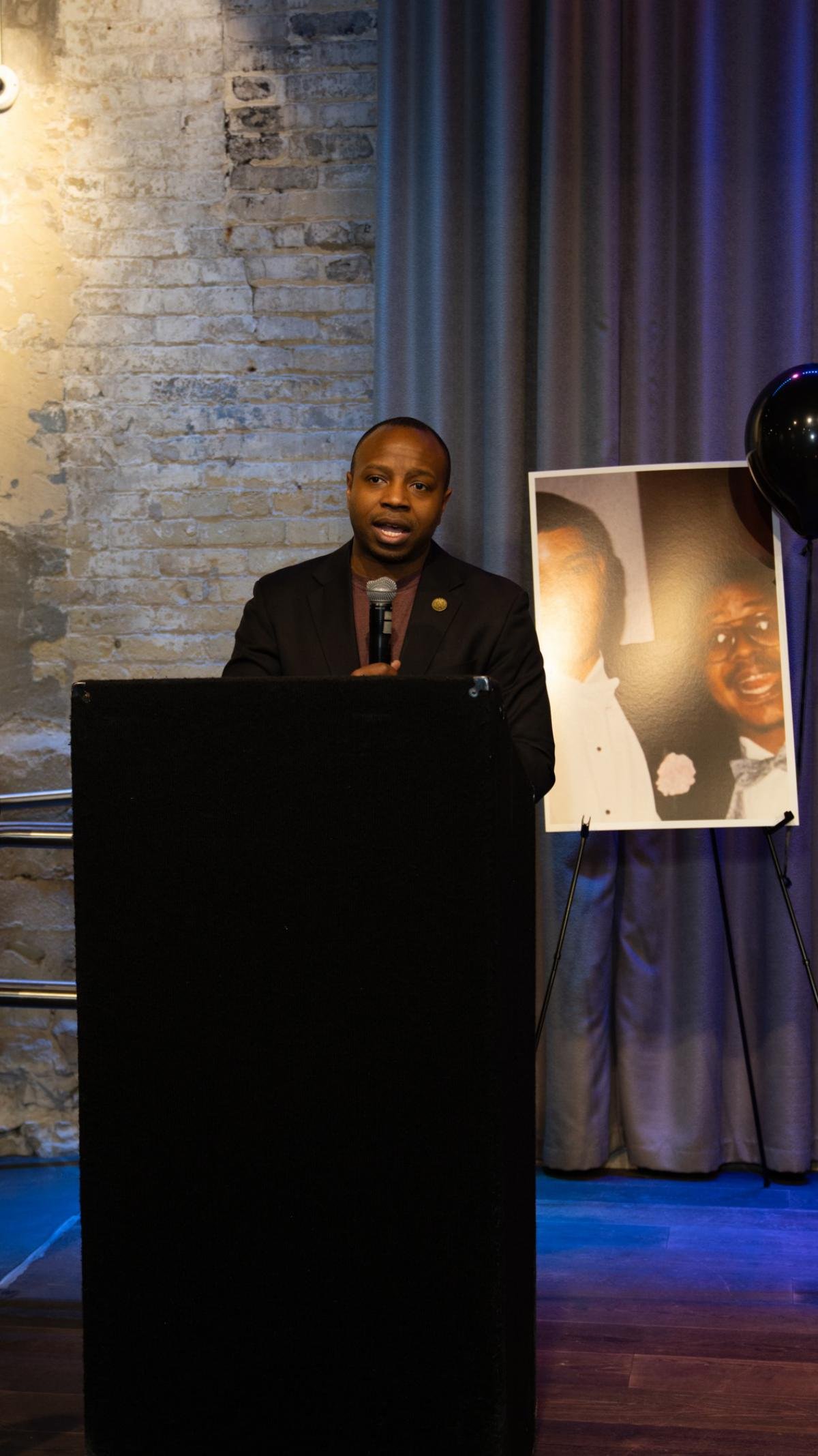
Milwaukee Mayor Cavalier Johnson
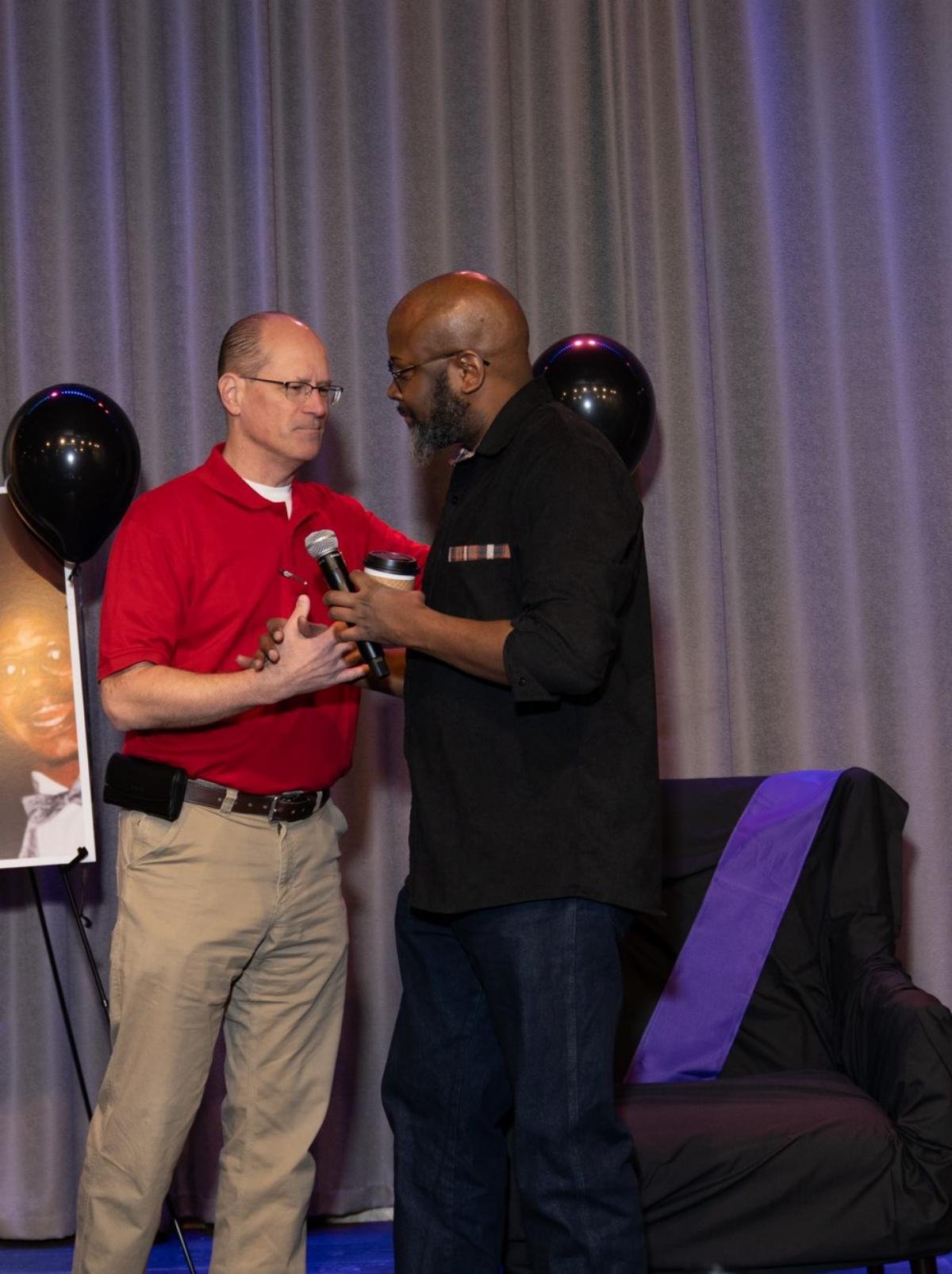
Milwaukee Fire Chief Aaron D. Lipski,
Behind the policies, the networks, and the speeches, deeply personal grief drives this work. Malik shared her own devastating stories of loss and resilience. She spoke of her best friend, Tanisha, who passed away from a drug overdose in 2018. Through Tanisha’s story, Malik illustrated the profound, lingering weight of grief that families carry. This personal tragedy fueled another major announcement: the relaunch of the Milwaukee County chapter of GRASS (Grief, Recovery and Support Services).
Designed specifically to support the family and friends left behind by drug-related deaths, the GRASS chapter officially relaunches in May. It provides a structured curriculum and, more importantly, a compassionate, safe environment where people can process their trauma together. You do not have to carry the weight of an overdose loss in silence.
Under Malik’s leadership, Samad’s House has played a critical role in preventing overdoses and saving lives since its founding in 2020. What started as a single sober living home has rapidly expanded into a robust network comprising three homes and a behavioral health clinic. They provide comprehensive, holistic services that help women and families maintain long-term sobriety. Samad’s House has transformed the lives of more than 75 women. Since 2024, they have distributed over 2,300 naloxone kits and fentanyl test strips. Their Ambassador Program continuously empowers women with lived experiences, turning them into trusted, street-smart advocates right in their own neighborhoods.
The Black Balloon Day event and the launch of the Midwest Regional Black and Brown Harm Reduction Network mark significant milestones in addressing the overdose epidemic. By centering the voices of those most impacted, building cross-sector partnerships, and replacing punitive measures with compassionate care, Samad’s House and its partners have constructed a sustainable, life-saving framework.
Civic and community leaders, public officials, service providers, and everyday community members are encouraged to join this collaborative effort. Your expertise, your compassion, and your commitment can ensure that harm reduction approaches continue to save lives.
As the event wound to a close, Taishea Higgins stepped forward. She delivered an emotional, poetic reading that captured the terrifying journey of many with substance disorders and the sharp pain of lives cut entirely too short. Her words hung in the air, a final reminder that no one asks for a substance disorder, and breaking free requires our combined strength.
“You have so much life to live and things to do,” Higgins recited. “Now you’re gone, and everyone’s missing you. None of us was born with an addiction in this world, but when we become victims, we become one less boy or girl. So let’s break every chain and curse that’s trying to take our lives. Let’s do this together, and together we will survive.”