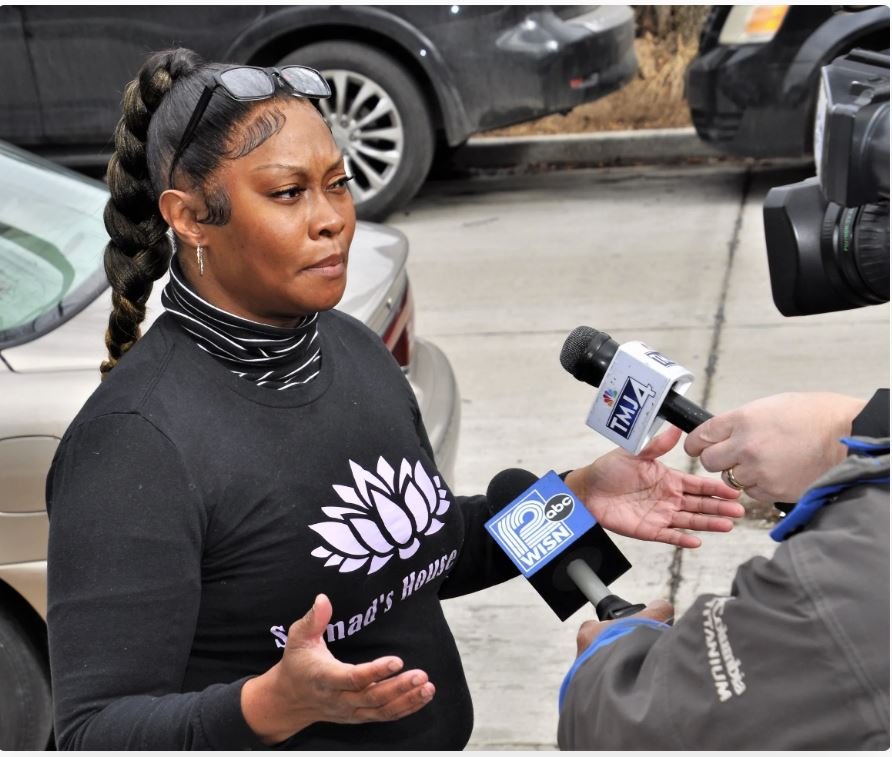
Recent overdose death numbers paint a picture of progress. Drug overdose fatalities are falling — across the country and across Milwaukee. But sit with Tahira Malik for a few minutes, and she'll tell you the number that doesn't get a headline: the decline is barely reaching the neighborhoods that need it most.
"Today, we are pleased to acknowledge that the overall number of overdose deaths is dropping in Milwaukee, Wisconsin, and across the nation," Malik says at the top of the latest episode of her podcast, Voices of the Front Lines. Then comes the turn. "But the decline is not as sharp in Black and Brown communities. Drug overdose deaths continue to ravage our families and our communities."
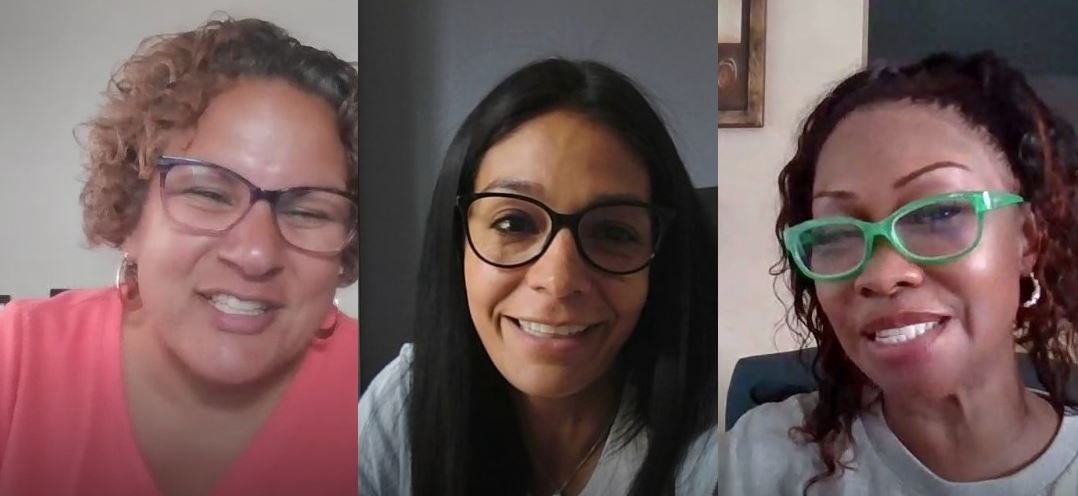
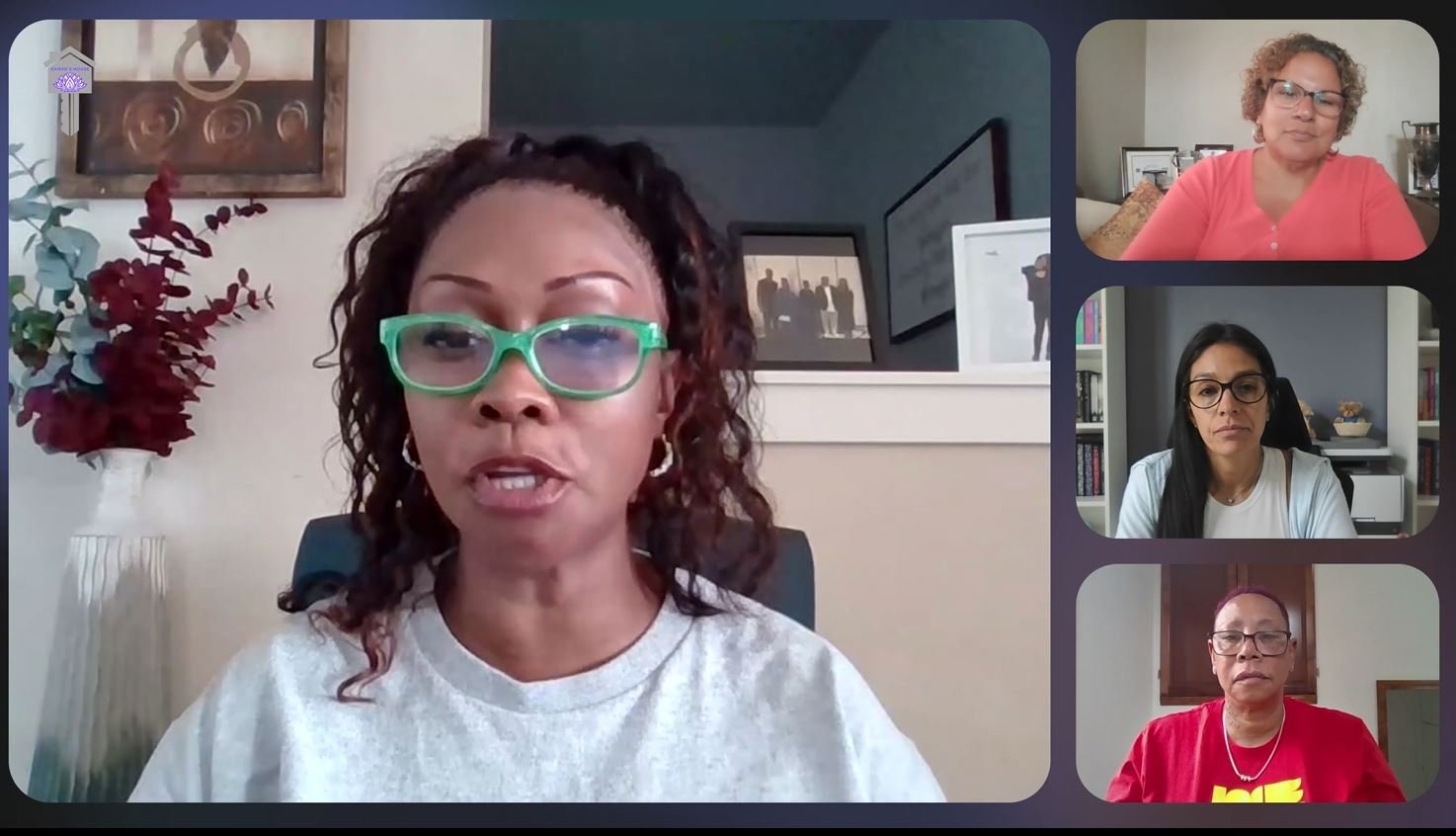
In Episode 2 of the podcast, Malik, founder of the Milwaukee women's sober living residence Samad's House, gathers three women who spend their days on the front lines of the overdose crisis. Together, they announce the launch of the Midwest Regional Black and Brown Harm Reduction Network, a coalition built to protect hard-won progress and carry it into the communities being left behind.
The conversation that unfolds is candid, personal, sometimes angry, and often hopeful. And by the end, it lands on three words that double as a mission statement: harm reduction is hope.
The Women at the Table
Malik built Samad's House out of grief and urgency. A survivor of substance use disorders who became an advocate, she started the residence because she and the people around her were tired of burying friends. "We were tired of losing our loved ones and our friends to fatal drug overdose," she says. "We feel it's our job just to be able to save some lives."
She's joined by three leaders who each carry a different piece of the work.
Connie Calderon directs Recovery and Peer Support Services at the Milwaukee Turners, a 173-year-old civic nonprofit — one of the city's oldest — that waded into harm reduction just three years ago. She now oversees peer support, recovery programming, and harm reduction services, including a vending machine inside the building that dispenses supplies. Her team meets people, as she puts it, "where they're at."
Amanda Maria De Leon is the Regional Community Impact Manager at Community Medical Services, a clinic that believes in on-demand intakes — no waiting, no red tape. Her job takes her from street outreach to the offices of politicians, fire chiefs, and police chiefs. "In my role, I get to do all the fun things," she says, "so we can bridge those gaps and better help our individuals out here using drugs."
And then there's Caroline Gaston — “Cece” to the people who know her — a Community Ambassador at Samad's House. She came to the program as a resident. She stayed because she found a calling. "I found my purpose in saving lives through harm reduction," she says.
A Life Saved, a Purpose Found
Gaston's story is the emotional center of the episode, and she tells it plainly. "I had the experience through lived experience where I accidentally consumed… had an encounter with some fentanyl accidentally," she says. "And it was through someone who had access to Narcan. And that's what saved my life."
The naloxone used is a nasal spray that can reverse an opioid overdose if it's given in time. For Gaston, it was the difference between a story abruptly ending and a story that continues. Now she carries that gift back into the community every week. Each Monday, she goes into targeted areas with high drug-related activity, distributing naloxone, training residents, and handing out supplies. "The evidence has presented itself in our mission on many occasions," she says, describing times she and her team have revived people mid-overdose. "Through the grace of Narcan, which saved their life."
De Leon has watched the whole landscape shift over two decades. "When I first started in this world 20 years ago, we didn't have access to that. And harm reduction, what is that?" she says. "Treatment was punitive." The change she names as most important is simple: access to naloxone. But even access came with a fight, because people were afraid to be seen taking a box. "Especially at a crime and safety meeting… " You don't want to be, 'Sally grabbed that box of naloxone. What's going on over at Sally's house?"
Her solution was to remove the choice — and the shame — entirely. "We just gave everyone a kit," she says. No raised hands, no judgment, no one wondering what the neighbors would think. "It allowed them a little bit of freedom and anonymity."
Malik remembers those early days, too. She recalls Samad's House's first Black Balloon Day — the national day of awareness for lives lost to overdose — and the training De Leon led. "You came in, and you trained a room full of people at Samad's House on the importance of using naloxone," Malik says. "But not only did you train on how to use it, but you also trained on what to look for." People didn't always recognize an overdose, she explains. "A lot of the time, some people didn't know that someone was overdosing. They thought they were just asleep. They didn't know that their respiratory system was slowing down."
When the Supplies Ran Dry
There was a time, not long ago, when the lifesaving supplies weren't there. Calderon remembers scrambling before her first naloxone training at the Turners. "I had to go searching for places just to get like three boxes or two boxes to cover the people that came to our training," she says. The contrast today still strikes her. "Now it's so nice to be able to have plenty of it that we aren't worried about hoarding it because we're so worried we're going to run out."
But the panel stresses that harm reduction reaches far beyond naloxone. Calderon points to fentanyl and xylazine test strips as the tools that open people's eyes. She urges everyone — not just people who use drugs — to understand them. "Even if you trust the person you're getting them from or you think you know them or you're their cousin, this is very important to do," she says.
And risk, she reminds listeners, doesn't respect boundaries. "You don't have to know a drug user to even have it on you," she says. "It could be your neighbor's 16-year-old granddaughter getting into her pills, or a baby even accidentally getting into their pills."
Malik lays out why the stakes have climbed so high. "Fentanyl is a synthetic opioid that has been tanked in the drug supply, and a couple of years ago was responsible for 80% of the fatal drug overdose deaths here in Milwaukee County," she says. Then there's the newer threat. "Xylazine is a horse tranquilizer that they're putting on drugs. It's just as fatal as fentanyl."
Gaston sums up the value of every supply in the kit. "It reduces the risk of catching infections," she says. "It reduces the risk of you coming in contact with straight fentanyl or xylazine-laced drugs, which is also a lifesaver."
The Wall Called Stigma
Ask these women what keeps drug users from getting help, and they answer without hesitation – stigma. "That's the number one reason why people don't get help," De Leon says, "because of that stigma, or people don't understand addiction as a whole."
She offers a stark comparison, underscoring the impact of stigma. "We care more about a stray dog, posting it on Facebook: this is the dog, this is where I found it, help me find its owner," she says. "But when we have these unhoused folks living in the street, you don't see anyone advocating and helping."
Her comments reflect the unfortunate reality. "Why not go up to that guy and say, 'Hey, what can I do to help you?' That's how we reduce stigma. That's how we get people into treatment."
Then, unprompted, De Leon speaks directly to anyone listening who's struggling. "You are worthy. You are worthy of saving. There is hope," she says. "I don't care if it's your 21st attempt at treatment. You can still get sober. And we'll meet you where you're at. That's what we're here for."
Malik feels the weight of stigma in the Black community. "In the most disproportionate neighborhoods, people didn't want that stigma around them," she says. "It goes back to why people choose to just live in their own bubble — because they don't want someone to come in and label them or judge them."
Why Representation Isn't Optional
The network's focus on Black and Brown leadership is strategic. "People want to see their people in these roles," De Leon says. "They want to look in the mirror and say, okay, that's my people telling me I'm going to die if I don't start taking the naloxone. It helps us make a better impact on the population that we're serving."
For Malik, representation delivers something even deeper than trust — it delivers proof. "One thing that was so pivotal for me was to be able to see someone like myself go through what I've been through," she says, "to be able to say, I can do it too. We can recover."
That's the engine behind the Samad's House ambassador program. Women like Gaston walk into neighborhoods as credible messengers — people who can open doors no outsider could touch. "Cece was able to reach people who knew her and perceived her as a credible person," Malik says. "They were more apt to take the resources… We're not here to judge. We've lost way too many people, and we feel it's our job just to be able to save some lives."
Calderon adds that culture and language matter just as much. Materials, she notes, often "don't translate exactly in Spanish, or Hmong, or the different languages that Milwaukee is full of."
The Missing Pieces
When Malik asks what the most important thing missing from people’s lives is, the answer comes back unanimously: housing.
De Leon is blunt about a recent county cut of $3.8 million in housing funding. "How in the heck are we going to help these people live a sustainable, sober life when we can't give them one of the main hierarchy of needs?" she asks. "You need a safe place to lay your head." Her fear is direct. "I hope we don't see a rise in overdoses because now folks don't have that access to housing that they once had."
Malik agrees, warning that the cuts push people "back into the same system that they're trying to recover from." She flags looming gaps in healthcare and Medicaid that could widen disparities in the year ahead.
The panel also presses for reform in how peer support specialists are trained and paid. Some of the most gifted messengers, Calderon explains, are shut out by state requirements. "Some of the best peer support people have been incarcerated for much of their adult life for foolish drug reasons," she says, noting it prevents them from being hired. Fix the training and recruitment, she argues, and you unlock the very people best suited for the work.
Three Words
Near the end of the conversation, Malik asks each guest to give lawmakers a message in three words. The answers land together: change your thinking, encourage harm reduction.
Harm reduction, they agree, is bigger than any single tool — bigger than naloxone or test strips or wound care. "Harm reduction is compassion," Malik says. "Providing compassion is hope, is saving lives."
De Leon puts it even stronger. "Harm reduction is hope."